Why have a home solar battery?
Home solar batteries allow you to used stored solar electricity to power your home. This means that solar energy generated for free during the day can be used at night after the sun goes down.
Many solar battery systems also allow homeowners to charge from the grid during off-peak times for use later in the evenings when electricity is most expensive.
Solar batteries can also provide a backup power supply in case of a blackout, or act as a permanent mains power supply where there is no power network available (in the case of an off-grid system).
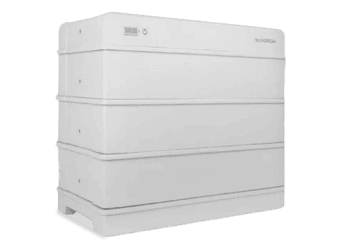
LuvSolar provide solar batteries that do all of the above, get in touch for a free quote or to find out more.
What size battery is needed to run a house?
For the average Australian home connected to the grid a battery capable of storing between 10-20kWh will be needed to run a home. The size of the battery that is needed to run a house will depend on:
- Whether the house is connected to the grid
- The daily energy usage of the house (i.e. kWh/day)
- How much solar energy the house is capable of producing
- What % of power is used at night compared to during the day
What is a battery kW and what is a battery kWh?
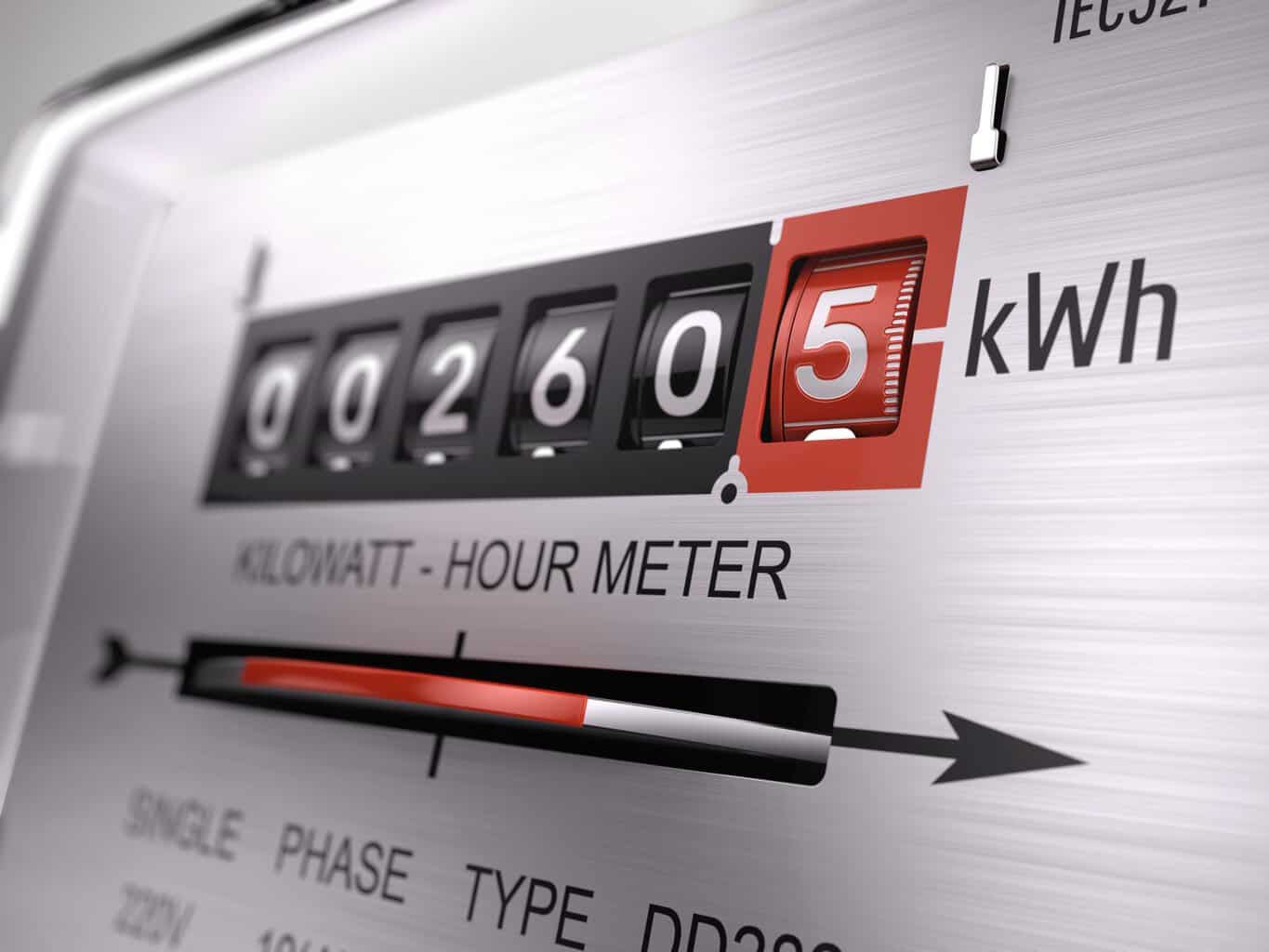
A source of much confusion for homeowners considering solar power and battery systems are the units used to measure system output and total energy. These are kW (kilowatts) and kWh (kilowatt-hours).
The kilowatt is the maximum amount of power that a battery is rated to deliver at any point in time. Think of this like the maximum speed on your car’s speedometer, but for your battery. Kilowatt-hours (kWh) are used to measure the total amount of energy. This could be the total amount of energy that can be stored in a battery.
Another way to think of kilowatts (kW) is like the rate at which water flows in to a glass (or battery!). Think of kilowatt-hours (kWh) like the total amount of water in that glass (battery).
How long will a 10kWh lithium battery last?
When fully charged, a 10kWh battery should last most homes for at least 5 hours after the sun goes down. Although if there is a very high power demand then in extreme circumstances the battery might be drained in as little as 2 hours, depending on the battery’s rated power output (in kW).
In the end, how long a 10kWh lithium battery will last depends on the rate at which power is being used in the home and the maximum rate that power can be supplied (in kW).
How long will a 10kWh battery take to charge
Most 10kWh batteries can fully charge in under 3 hours. Although this depends on the inverter, the make of the battery, and the available power for charging, i.e. batteries can always charge at their full rate from the grid, but can be slower to charge from solar on a rainy day.
How much solar is needed to charge a 10kWh battery?
A 10kWh battery will be comfortably charged by a 6.6kW solar system on any sunny day of the year in Sydney, Newcastle, the Hunter Valley, or Byron Bay. In some parts of Australia which are further south like Melbourne or Hobart a slightly larger solar system will be needed to make sure that the battery is able to fully charged through winter.
Read more about how much solar you can install on your roof here.
What types of solar battery are there?
There are different types of batteries that have been used with solar power systems. These are defined by their chemistry and manufacturing methods. Broadly the two most common types are:
- Lead-acid batteries
- Lithium-ion batteries
Lead -acid batteries have historically been used for off-grid solar systems. This is because, for off-grid systems, to make sure that the batteries don’t run out during a run of bad weather, they need to to store at least 3 days of average power usage (and 5 days if you don’t have a back up generator). So, batteries in off-grid systems need to have a high kWh capacity but rarely discharge much of this capacity. Lead-acid batteries have been suited to this application as they have been cheaper than lithium-ion per kWh.
However, lead acid batteries don’t tend to have a great life expectancy when fully discharged on a regular basis. Lead-acid batteries are also bulky, can vent hydrogen, and some types require regular maintenance. They aren’t the best choice of solar batteries when there is a grid connection, for these systems lithium-ion batteries are much better suited.
Why use lithium ion batteries?
Lithium-ion batteries offer several advantages for home power storage compared to other chemistries like lead-acid batteries:
Higher Energy Density – Lithium-ion batteries store more energy per unit of volume or weight, making them compact and space-efficient.
Longer Lifespan – They typically last 10+ years and support thousands of charge/discharge cycles with minimal capacity loss.
Faster Charging – Lithium-ion batteries can charge more quickly than lead-acid.
Greater Round-Trip Efficiency – They can exceed 90% energy efficiency, meaning less energy is lost during charging and discharging.
Low Maintenance – Unlike lead-acid batteries, lithium-ion systems require little to no regular upkeep.
Depth of Discharge (DoD) – They can safely discharge 80–90% of their capacity, providing more usable energy.
More Compatible with Solar & Smart Grids – Their responsiveness and efficiency make them ideal for time-of-use tariffs, VPPs, and smart home integrations.
Lower Total Cost of Ownership – While upfront costs can be higher per kWh of storage, their long lifespan can make them more economical over time.
Wide Market Availability – They are the most commercially available battery type, benefiting from mass production and innovation.
Proven Technology – Used extensively in electric vehicles and consumer electronics, they have a solid performance track record.
Environmental Impact – While not perfect, they contain fewer toxic materials than lead-acid alternatives and are increasingly recyclable.
Support from Incentives – Many government rebates and programs are designed specifically with lithium-ion systems in mind.
Will a battery run my home in a blackout?
Yes, in 2025 most modern home solar battery systems will run your home in a blackout. Although to be sure that your battery will provide back-up power in the event of a blackout it is important that your confirm the following with your solar and battery installer:
- That the battery system’s inverter will provide back up functionality in case of a blackout.
- Whether the battery is being installed to provide power to the entire house or a select power circuit in case of emergencies.
- The amount of power that the battery can provide (in kW) and what appliances can be run simultaneously off the battery.
- The total amount of energy the battery will store and how long this is likely to last in a blackout
LuvSolar has experience providing solar and battery systems that provide backup power for our customers. Learn more here.
What is the average solar battery price?
Depending on the equipment manufacturer and the battery size, most llithium-ion home solar batteries start at around $5,000 before subsidies are applied
What are the government rebates for batteries?
Recognising the value that batteries can play in supporting power grids both the NSW and Commonwealth Governments offer support schemes for homeowners to install home solar batteries. These are summarised below.
Labor Government’s National Battery Subsidy (Announced April 2025):
Aims to subsidize household batteries for homes with rooftop solar, reducing the cost of a typical battery system by 30%.
Part of a $2.3 billion initiative to support renewable energy adoption.
Proposed Home Battery Tax Relief (Pending Implementation):
Proposes tax deductions of up to $3,500 or 50% of the cost of home battery system installations, whichever is lower.
Applicable for systems installed between July 1, 2024, and June 30, 2034, designed and installed by Clean Energy Council accredited professionals.
Peak Demand Reduction Scheme (PDRS):
Offers upfront rebates between $1,600 and $2,400 for installing eligible home battery systems.
An additional incentive of $250 to $400 is available for connecting the battery to a Virtual Power Plant (VPP).
The VPP incentive can be claimed twice, with a minimum interval of three years
If you want to know more about home solar batteries, get in touch for a free no obligation consultation and quote. We’d love to hear from you!